By business type
Inventory for a hardware store or a joinery workshop
A hardware store's problem isn't counting — it's telling forty near-identical references apart. Inventury counts whole units and is built for catalogues that size.
Start with what saves you time: Inventury counts whole units. There's no unit of measure, so it doesn't sell 2.5 metres of cable or 0.75 kilos of loose screws, and it doesn't turn a 100-metre reel into loose metres. If your business lives on selling by the cut or by weight, this isn't the app — better to learn that in this paragraph than on the third screen.
What it does solve — and it's half of a hardware store's work — is a huge catalogue of near-identical references: boxes, sets, tools, packaged parts, sealed formats. Forty screws that differ by three millimetres, and somebody has to find the right one at the counter with a customer waiting.
Dimensions and weight on every reference, so you can tell them apart
Each item stores its length, width and height in millimetres and its weight in grams, with decimals. They aren't a calculation: they're the description that sits on the item and stops two near-identical references from being the same thing when it's time to count or to order.
What you search and read in the list is the usual: the photo, the name, the SKU, the brand, the code. The dimensions live inside, for when you need to be sure which one it is.
- Length, width and height in millimetres, with decimals
- Weight in grams
- Search by name, SKU, brand or barcode
The dimensions describe the reference: they aren't used to work out price, they aren't searched, and they don't print on the label yet.
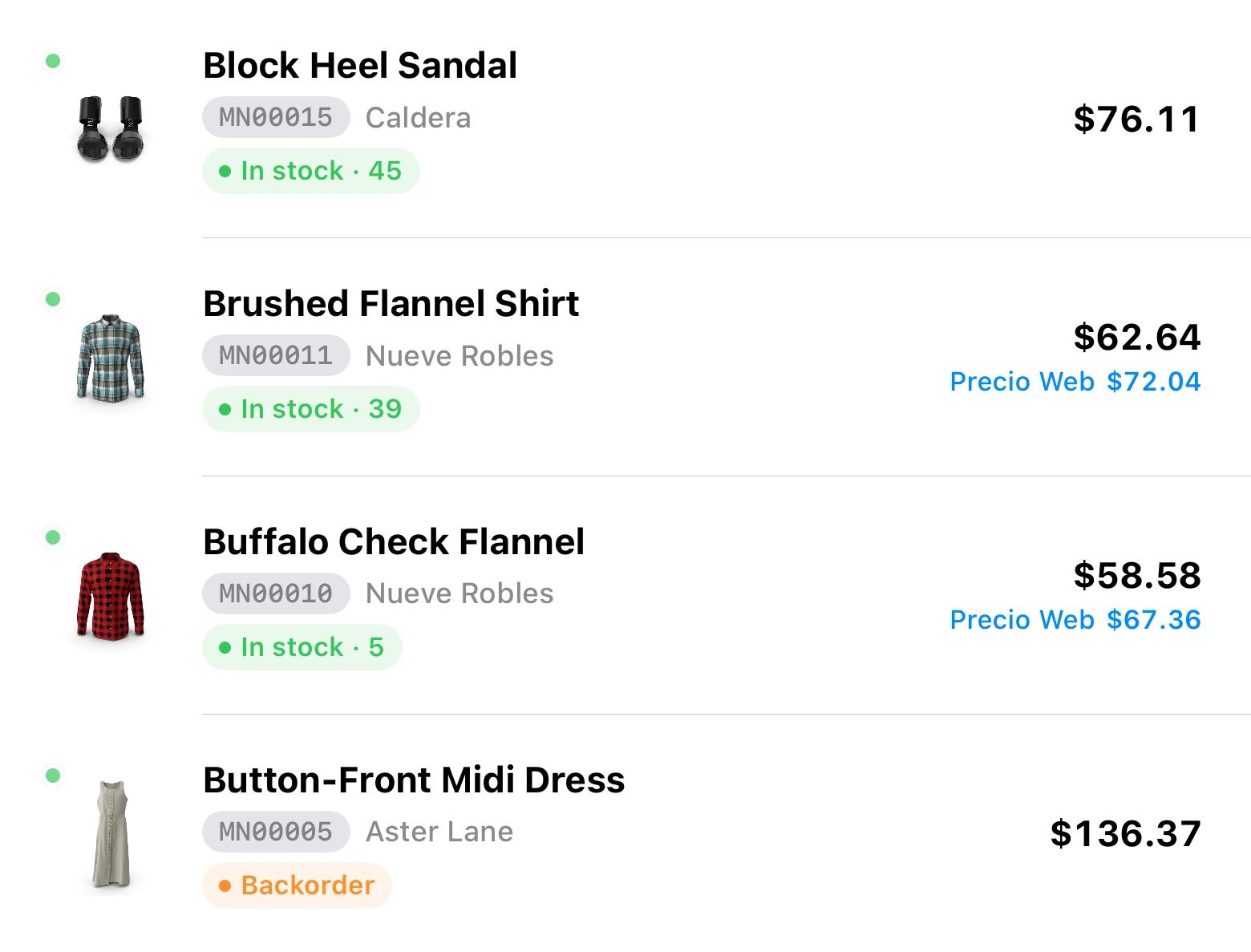
The same part in several sizes, inside one item
One screw in six lengths doesn't have to be six separate items in the list. They're variants of one item, each with its own stock, its own price and its own barcode.
Open the reference and you see at a glance which size is running out — which is exactly what decides the order: it's almost never "the screw" that's missing, it's one specific size.
- Variants by size, format or finish
- Its own stock and price on each variant
- A barcode per variant, so nobody rings up the wrong one
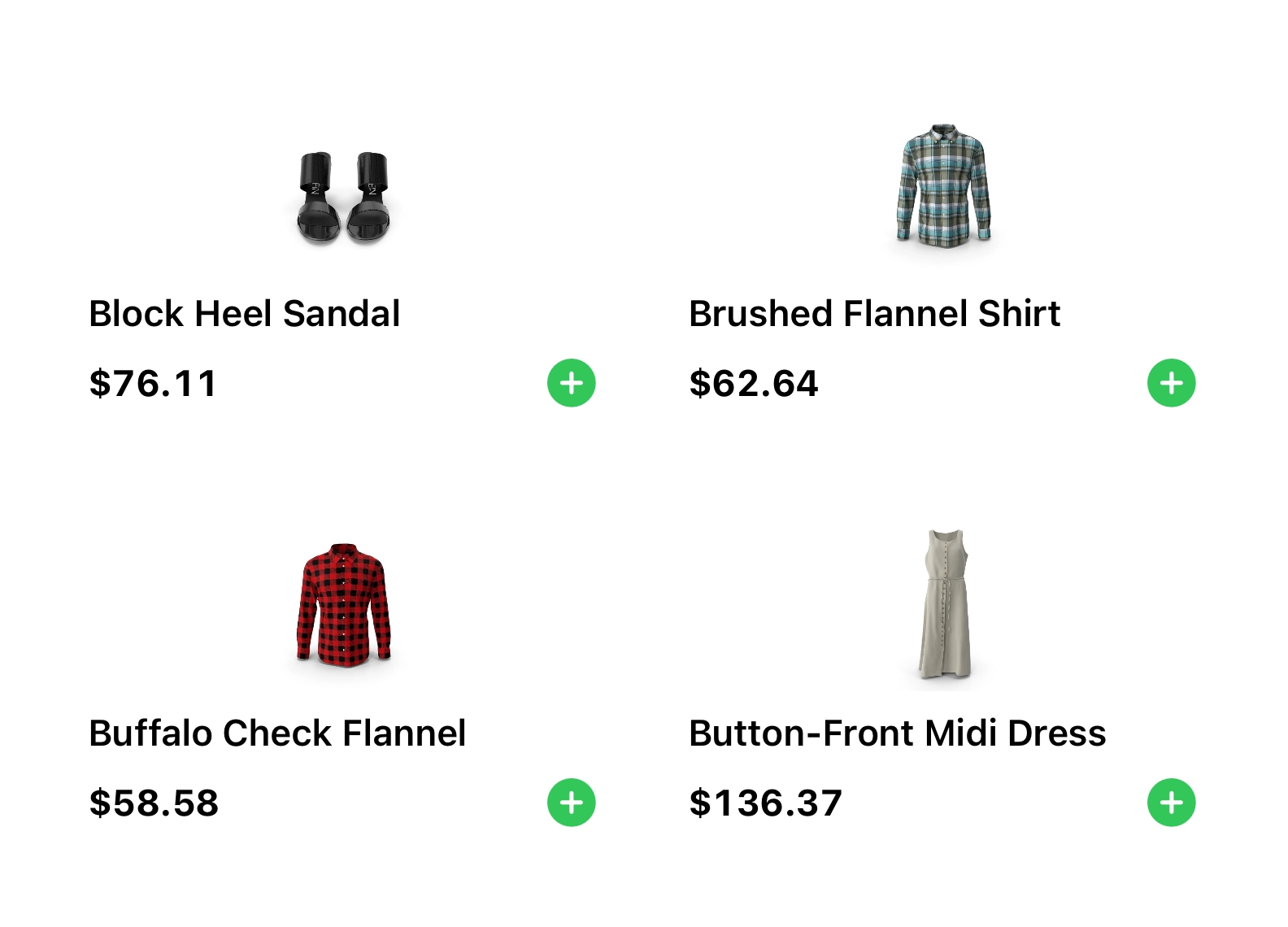
Your own codes, for everything that arrives without one
Half a hardware store has no barcode: loose parts, repacked material, whatever comes in a supplier's bag. For that the app generates printable QR labels carrying the item's code. Stick them on the drawer or the bag and from then on the camera reads them just like a factory barcode.
That's what turns counting from a memory exercise into pointing and confirming.
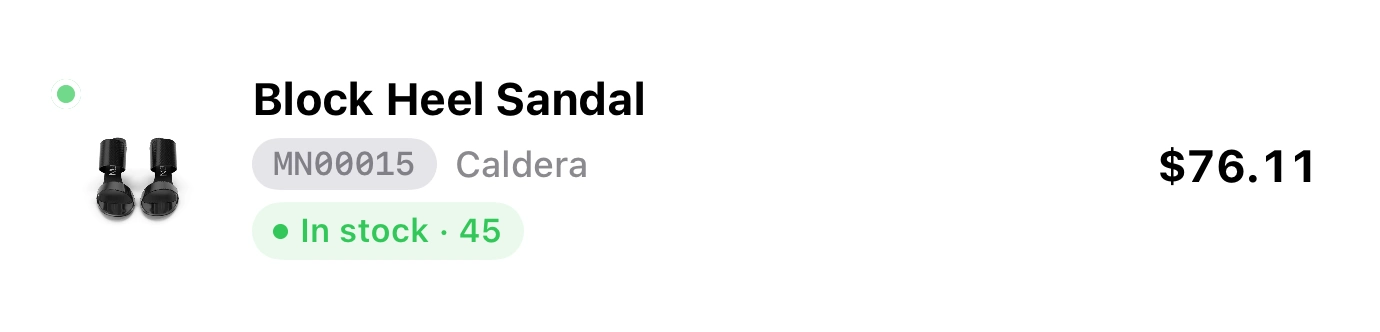
Counter, back room, and transfers that leave a trail
A hardware store keeps the same product in two places: what's out front and what's behind. With separate locations, counter stock is what sells and back-room stock is what replenishes it, and moving something records a transfer — with its history — instead of stock appearing and vanishing.
Each reference's state reads in colour in the list itself: in stock, reorder, out of stock. That's what builds the supplier order without walking the aisles.
- Locations with their own inventory, and transfers between them
- A transfer history, so you know what moved and when
- Stock states in colour: in stock, reorder, out of stock
Warnings are seen when you open the app: no low-stock notification arrives with the app closed.
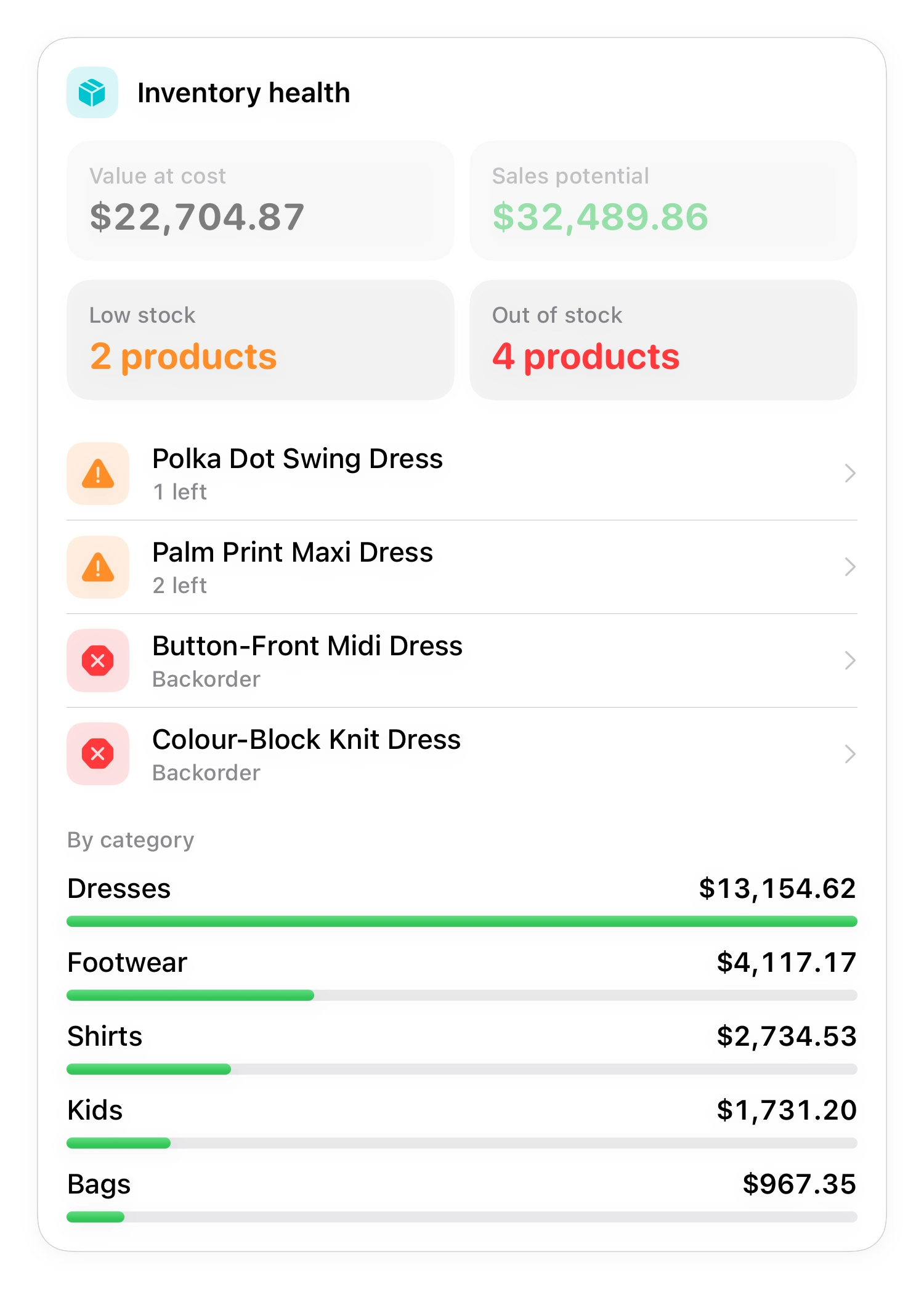
What it doesn't do: selling by the metre or the kilo
Repeated here because it's the decision that matters. Inventury's stock is a whole quantity: there's no unit of measure, no price per metre or per kilo, and no conversion from buying a 100-metre reel to selling it by the metre. A reel is one item with one unit.
There is a way to work with that, and plenty of hardware stores already do: sell fixed formats. Cable in 5, 10 and 20-metre runs, each run a variant with its own price and code. You cut once and count units. It doesn't cover everything, but it covers a good part of packaged bulk.
If most of your sales are by the cut or by weight, better to wait: a unit of measure has been asked for and isn't there.
How far it goes today
| What a hardware store needs | In Inventury |
|---|---|
| A big catalogue of similar references | Yes: photos, SKU, search and categories |
| Length, width, height and weight per reference | Yes, with decimals, as description |
| Variants by size with their own stock and price | Yes |
| Printable QR labels for your own codes | Yes |
| Counter and back room separated, with transfers | Yes, with locations and a history (transfers from Pro) |
| Dimensions printed on the label | Not yet |
| Low-stock notification with the app closed | No: warnings are seen when you open the app |
| Selling 2.5 m or 0.75 kg | No: stock is a whole quantity |
| A unit of measure (metre, kilo) per item | Doesn't exist |
| Buying a 100 m reel and selling it by the metre | No: the reel is one item with one unit |
| Price per metre or per kilo | No |
Written 18 September 2026. If any of this changes in the app, this table changes with it.
Frequent questions
I sell cable by the metre. Is this for me?
For that part of the business, not today: stock is a whole quantity and there's no unit of measure or price per metre. What you can do is sell fixed runs — 5, 10, 20 metres — as variants with their own price and code. If nearly everything you sell is by the cut or by weight, better to wait.
Can I store the dimensions of each reference?
Yes: length, width and height in millimetres and weight in grams, with decimals. They're there to tell similar references apart and to order properly from the supplier, not to work out price.
I stock the same screw in six lengths. Is that six items?
It doesn't have to be: they're variants of one item, each with its own stock, price and barcode. Open the reference and you see which size is running out, which is what decides the order.
Half my products have no barcode.
The app generates printable QR labels carrying the item's code, and that's on every plan, the free one included. Stick them on the drawer, the bag or the shelf and the camera reads them like a factory code, both for counting and for selling. What doesn't print on the label yet are the dimensions.
Can I keep the counter separate from the back room?
Yes, as separate locations, each with its own inventory, and movements between them are recorded as transfers with their own history. The free plan includes a single location and no transfers; Pro goes to three and Business to unlimited.
How many references does it handle?
The free plan tops out at 10 items, which is for trying it; Pro and Business have no item limit. A hardware catalogue needs a paid plan from day one.
Load your most confusing reference and look at the list
It's on the App Store. Take the group of parts that gets mixed up most at the counter, enter it with its dimensions and variants, and see whether it reads clearly.