By business type
Clothing and footwear inventory, by size and colour
In fashion you don't sell a product — you sell one size in one colour. Inventory that can't tell those apart is no use for reordering or for knowing what's left over.
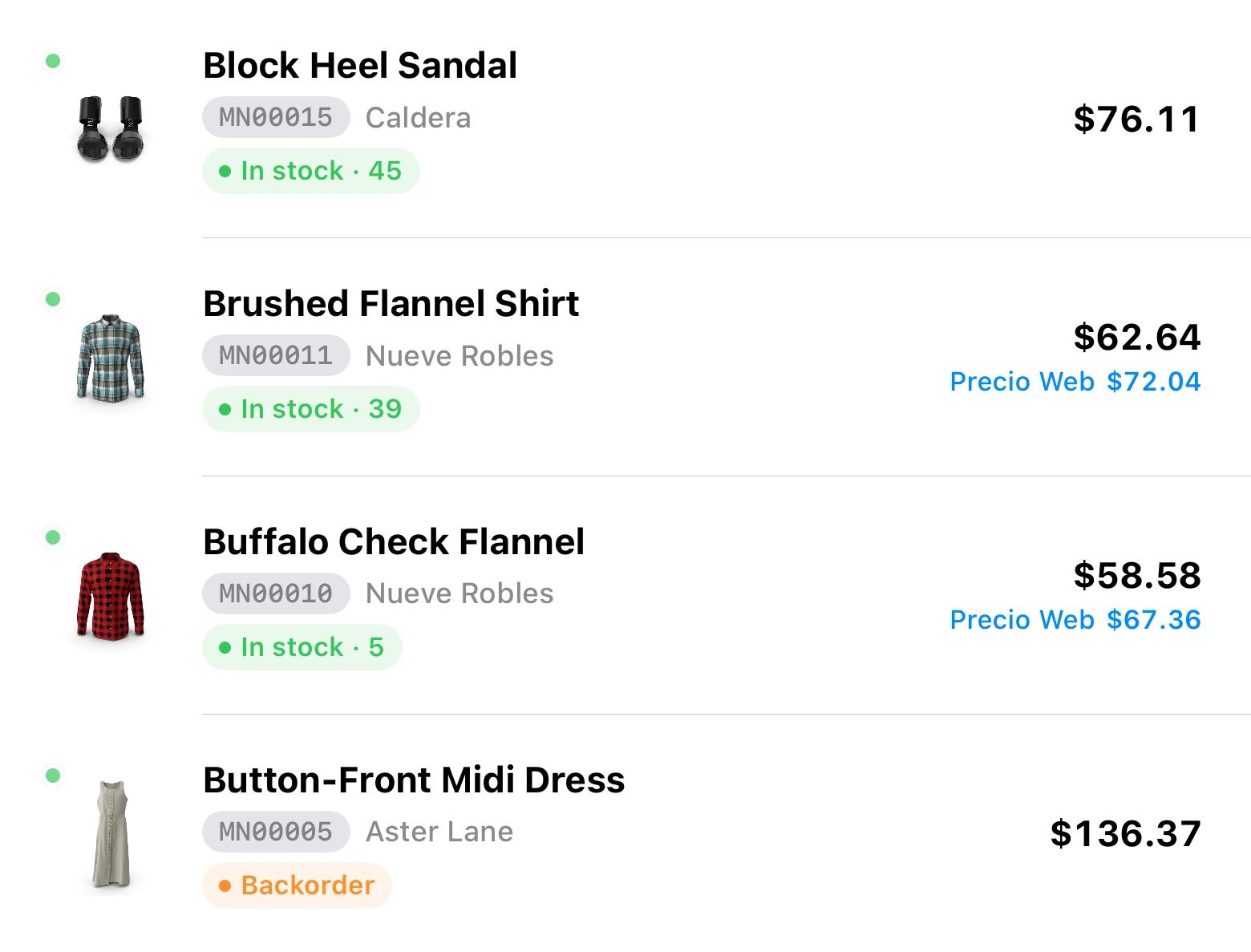
"Twelve shirts left" isn't useful if eleven of them are size S. In clothing and footwear the detail lives in the variant, and that's where most systems force a choice between two bad options: create a separate item per size — multiplying the catalogue by six — or keep one item and lose the detail.
Inventury keeps variants inside the item: one model, its sizes and its colours, each combination with its own stock. The catalogue reads by model and the count happens by variant.
One model, its sizes and its colours
The item is the model. Inside it sit the variants with their own stock, their own SKU and their own price when it needs to differ. Open it and you see at once which combination sold out and which has been there all season.
That changes the conversation with your supplier: you don't ask for "more of this model", you ask for the two sizes that actually sold.
- Variants by size, colour or format
- A SKU per variant, for the barcode
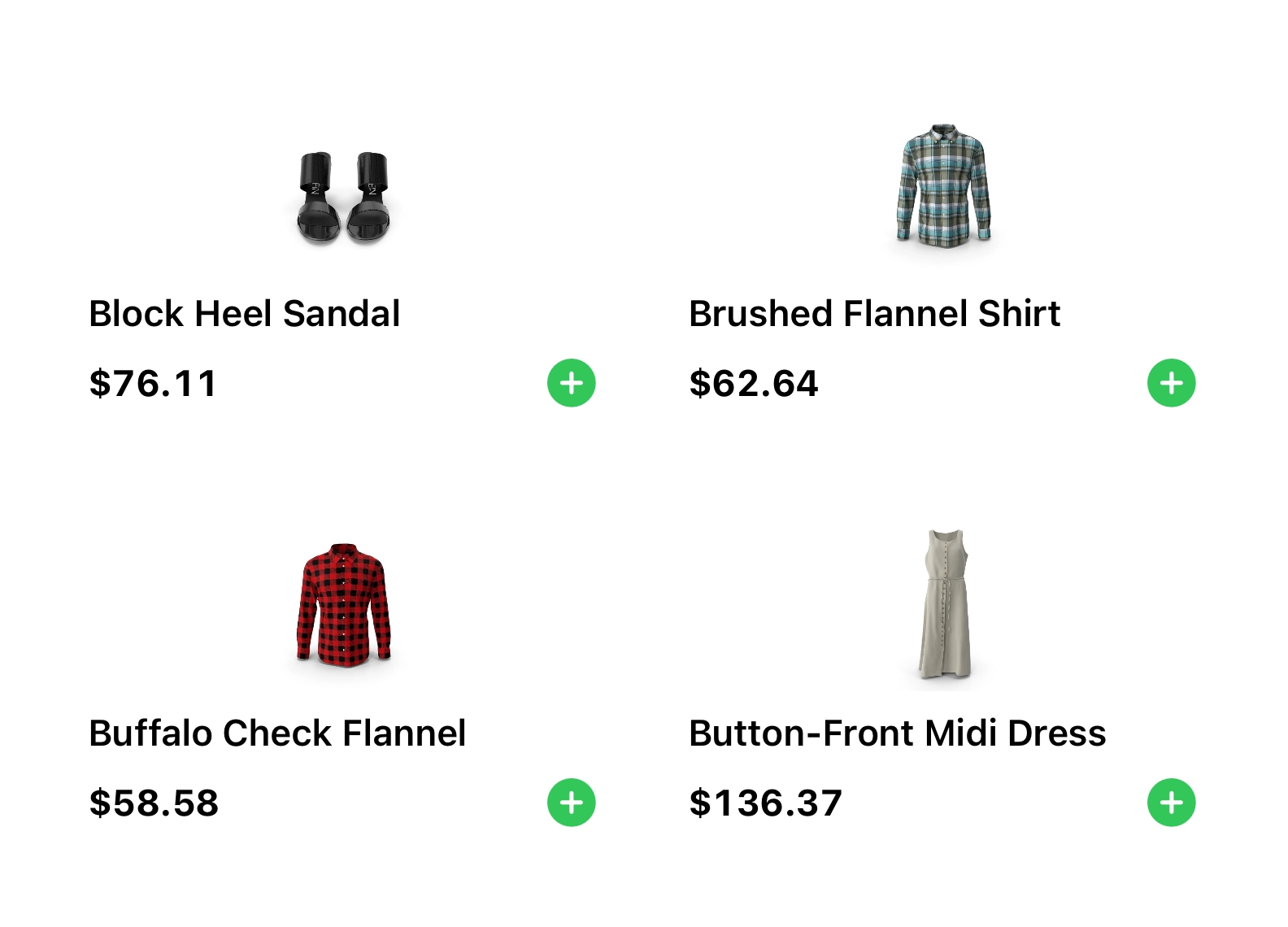
- A photo per item, which in fashion is half the recognition
Labels for whatever arrives without a code
Plenty of garments arrive with no usable barcode, or with a manufacturer code that doesn't distinguish size. From the app you generate printable QR codes per item, stick them on the label, and from then on they scan like any other product.
With that, counting the fitting room at closing or finding a size in the back stops being a matter of reading labels by hand.
Season: what rotated and what stayed
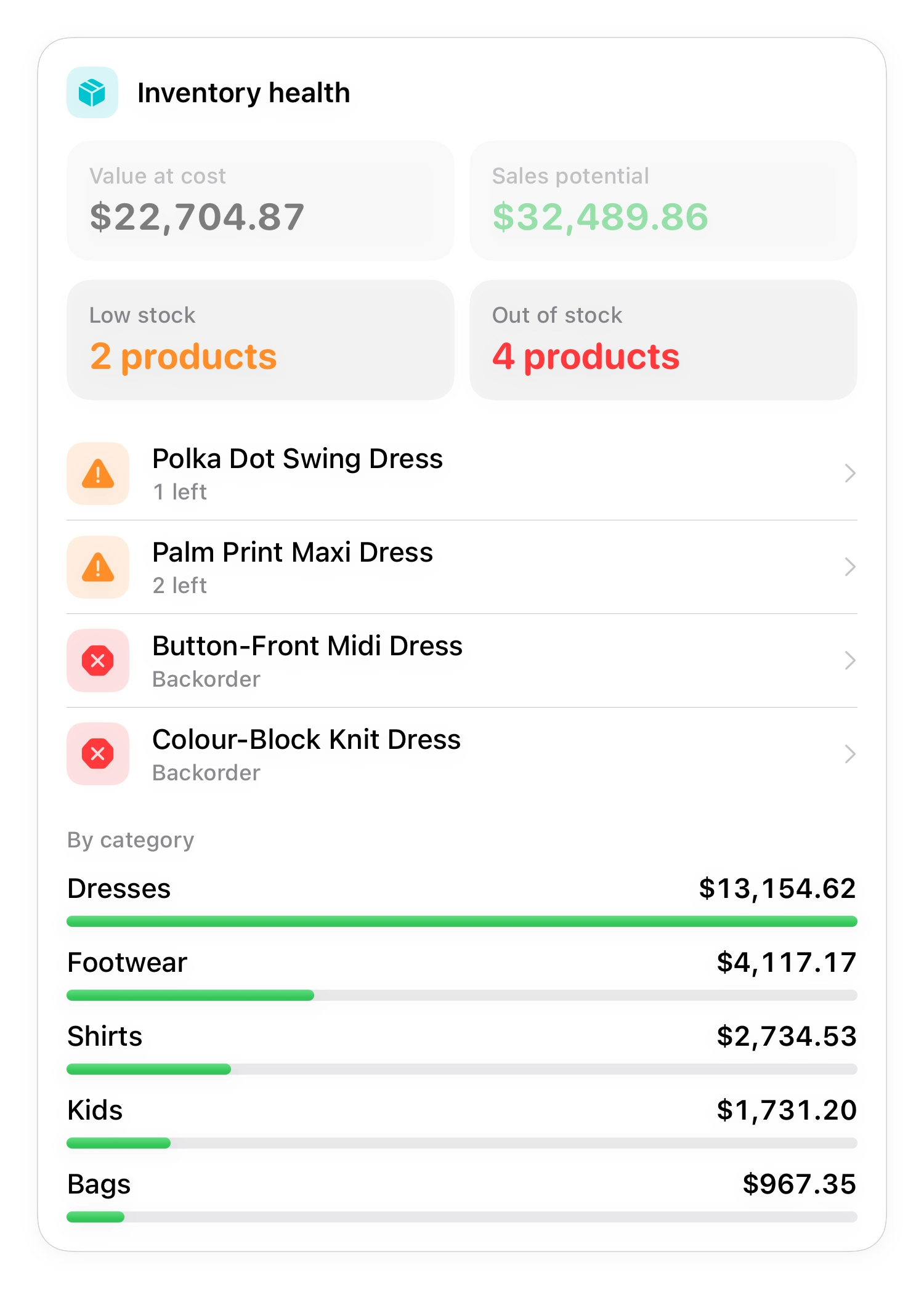
At the end of a season there are two questions: what to reorder and what to mark down. The best-sellers report answers the first; still inventory answers the second.
Seeing how much money is parked in sizes that don't move is what turns a markdown into a decision instead of a hunch.
If you also sell online, the price isn't the same
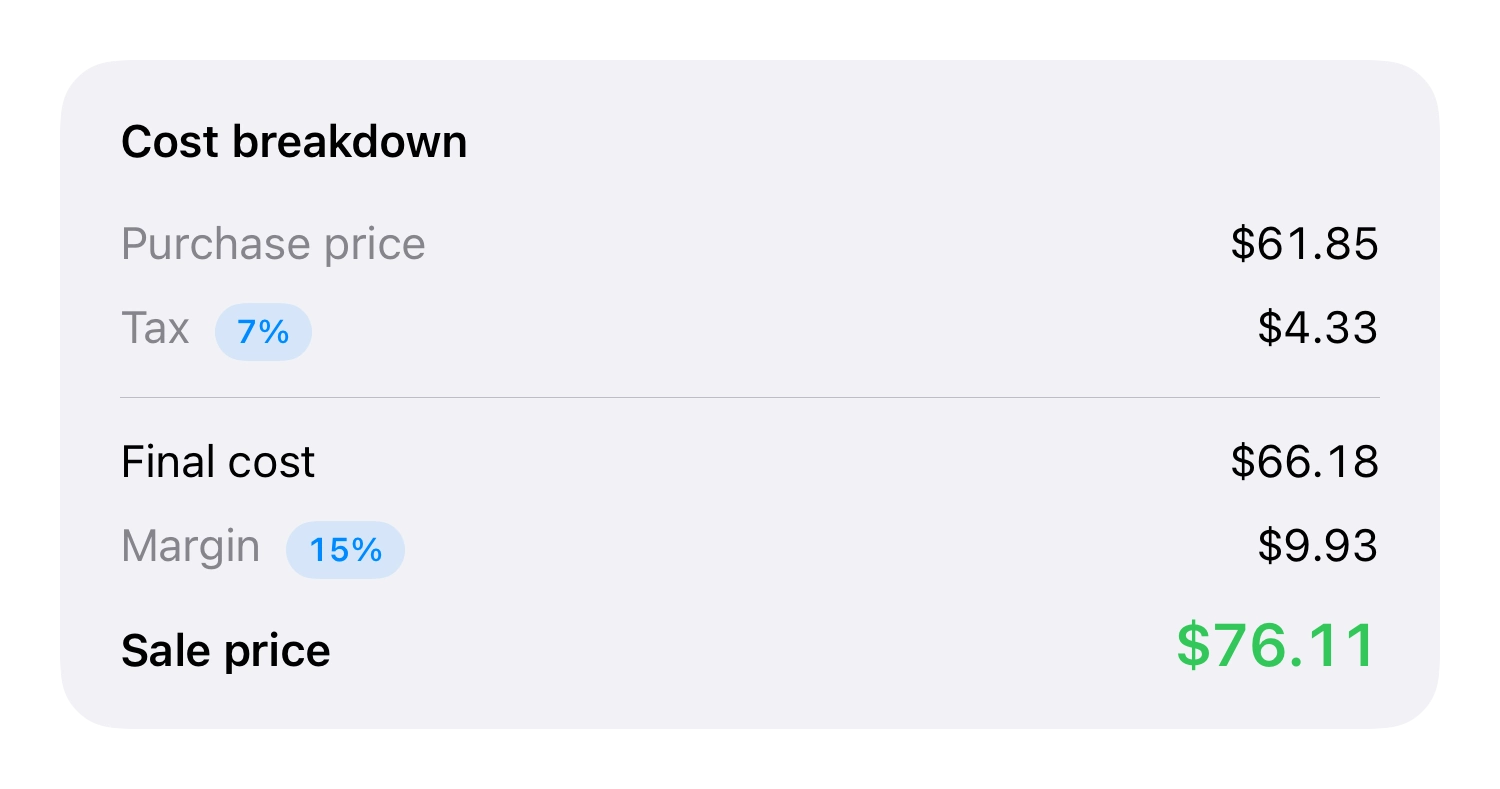
The same garment in your shop and on a platform that charges a fee doesn't leave you the same money. Inventury works out the price you need per channel to hold your margin, fee already deducted, and on the Business plan it can sync catalogue, price and stock with WooCommerce or Shopify.
If the clothing is imported, costing adds freight and customs before calculating anything: the real cost per garment, not the invoice's.
Frequent questions
How many variants can one item have?
As many as the model needs: sizes, colours or both combined. The free plan caps you at 10 items in total; on Pro and Business items are unlimited.
Can I set a different price per size?
Yes. Each variant can carry its own price and its own SKU when needed; otherwise it inherits the model's.
Does it print barcode labels?
It generates printable QR codes per item. It doesn't print factory EAN labels, but the app reads its own QR just as fast.
Does it work for a shop with two locations?
Yes. Pro includes 3 locations and Business has unlimited locations and stores, each with its own stock and transfers.
Add one model with its sizes and see how it reads
It's on the App Store. With the free plan you can try it on your fastest-moving models before uploading the whole catalogue.