By business type
Inventory for a cell phone and tech store
In this trade the question you have to be able to answer isn't how many are left. It's "did this handset come from here, when, and who bought it?" — and that needs the IMEI stored on the sale.
A phone shop sells few units of high value, and every unit has a name of its own. Months later a handset comes back under warranty, someone asks for an exchange, or a question arrives about one specific phone. If the IMEI ended up in a notebook or a WhatsApp thread, the answer takes half an hour and sometimes never comes.
Inventury stores the IMEI or serial number on the sale, scans it with the camera, warns you if that number already went out before, and then finds the sale from just the last few digits. This guide covers how that works and what it doesn't do yet, which in this trade is worth knowing before you start.
The IMEI lives on the sale, not in a notebook
When you record the sale there's a field for the serial number or IMEI of the unit that left. You type it, or point the camera at the code on the box and read it. It stops being a number somebody had to copy by hand correctly.
From then on it travels with the sale: it stays in the record, it prints on the PDF receipt you send the customer, and it sits next to the date and the customer.
- A serial / IMEI field on the sale
- Camera capture, so nobody types 15 digits
- The number prints on the PDF receipt
Search by IMEI and get the sale
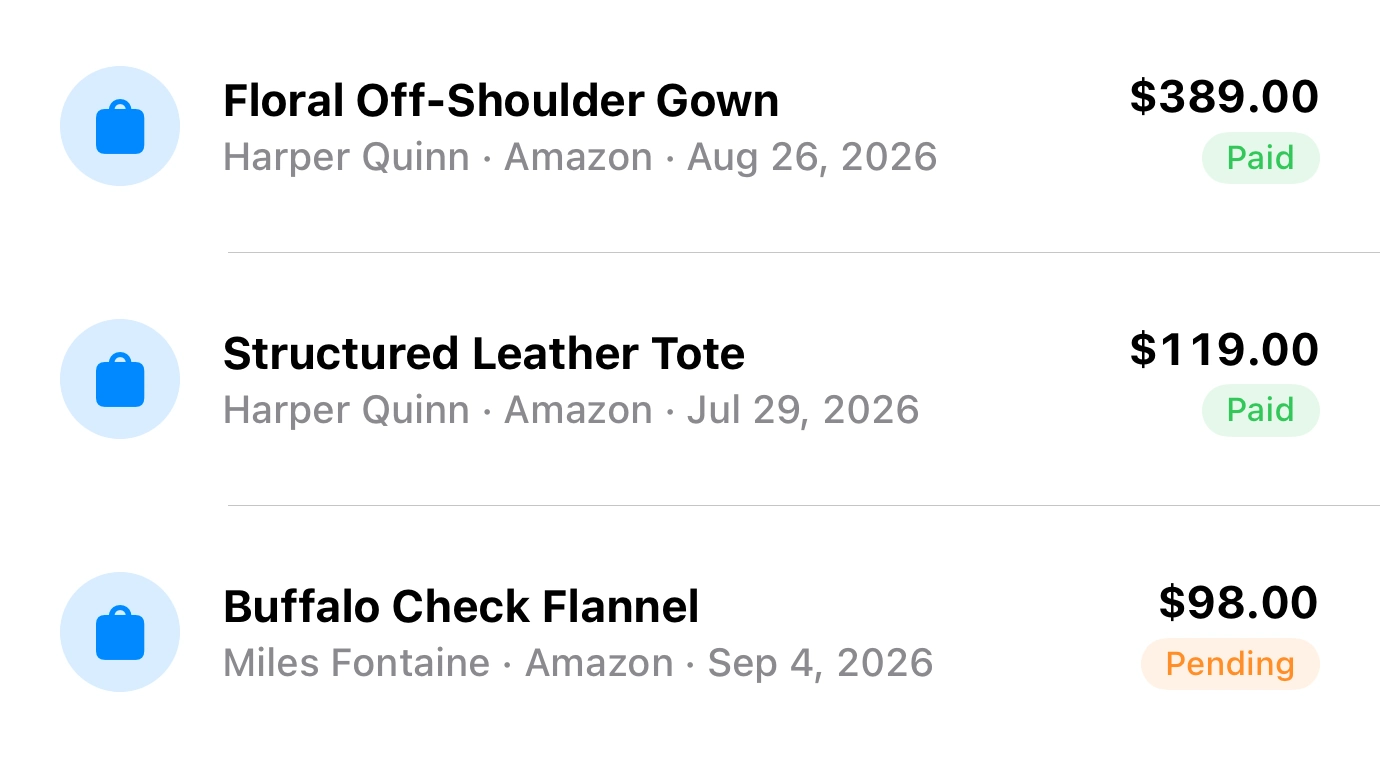
In Sales you can search by that number, and you don't need the whole IMEI: type the last digits and the sale comes up. With it come the date and the customer, which is what you actually need when someone walks in holding a handset.
It's the difference between "let me check and call you back" and answering at the counter with the phone in your hand.
- Search by serial or IMEI inside Sales
- Works from the end of the number, no full typing
- Returns the sale with its date and its customer
A warning if that IMEI already went out
If you record a sale with a number that's already on another sale, the app says so and shows you the earlier sale. It doesn't block it — it puts it in front of you so you decide.
That covers two different holes. One is the typo: the same handset recorded twice throws off both stock and the sales report. The other is the handset that comes back — a return, an exchange, a repair — where the first thing you need is what happened the first time round.
Warranty and notes on the product
The product holds its warranty in months and a notes field, which in this trade fills itself: the exact variant, the colour, what's in the box, what the supplier promised.
The warranty is stored and read: it's a number of months, not a start and end date, so the app doesn't work out the day it runs out and doesn't warn you. To know whether a handset is still covered you look at the sale date — which is stored, next to the IMEI — and count the months.
What does warn you by date is batches with an expiry date, which is a different feature meant for stock that goes off.
How this works day to day
One concrete recommendation, because it changes the outcome: record handsets one at a time. The serial number belongs to the sale, so one sale with three phones stores one number. Make it three sales and each handset keeps its own IMEI, and everything else — the search, the duplicate warning, the receipt — behaves the way it should.
The one that asks for the serial number is the sale you record from the item, and that sale deducts stock by the same rule as the till: if there are units, they come off; if the item sits at zero, the sale is still saved as an order and stock isn't touched. Cancel it or delete it and the units come back.
The till, the fast counter, doesn't ask for the number yet, so the natural split is this: handsets get recorded from the item, which is where the IMEI stays, and accessories — cases, chargers, protectors — ring up at the till, which is what it's good at.
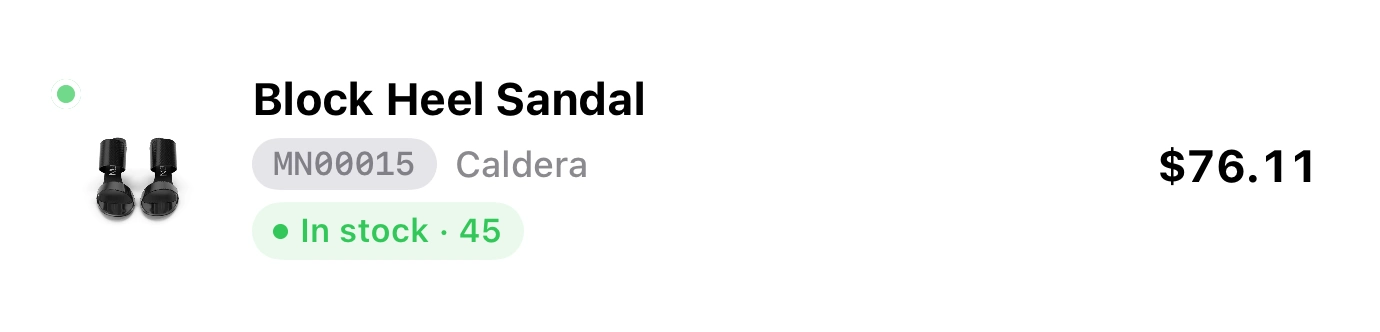
The inventory itself behaves like any other business: the item carries a quantity. Ten iPhones of the same model are one item with ten units, not ten records each with an IMEI. The IMEI appears when a unit leaves.
How far it goes today
| What a phone shop needs | In Inventury |
|---|---|
| Storing the IMEI of what you sell | Yes, on the sale, typed or scanned with the camera |
| Several IMEIs on one sale | No: one number per sale, so record handsets one at a time |
| IMEI at the till (fast counter) | Not yet: the field is on the sale you record by hand |
| The sale with the IMEI deducting stock | Yes, if there are units; cancelling or deleting it returns them |
| Plans | Sales and customers are on Pro; the till is on Business |
| A duplicate-IMEI warning | Yes, and it shows you the earlier sale |
| Searching by IMEI | Yes, in Sales, even from just the end of the number |
| IMEI on the customer's receipt | Yes, on the PDF |
| Stock unit by unit, each with its IMEI | No: the item carries a quantity |
| Warranty | In months, stored on the item. No end date, no alert |
| Notes per product | Yes, free text |
Written 18 September 2026. If any of this changes in the app, this table changes with it.
Frequent questions
Can I store the IMEI of every phone I sell?
Yes, on the sale: there's a field for the serial number or IMEI and you can read it with the camera instead of typing it. It's one number per sale, so to keep each handset with its own, record sales one at a time.
Can I find a sale by its IMEI?
Yes, by searching in Sales, and the last few digits are enough. The sale comes up with its date and its customer, which is what you need when someone arrives with a handset and a complaint.
Does it warn me if I already sold that IMEI?
Yes. Record a sale with a number that's already on another one and the app tells you, showing the earlier sale. It doesn't block it: you decide, since it might be a legitimate return or just a typo.
Does it track each unit separately with its own IMEI in stock?
No. Inventory counts units: ten handsets of the same model are one item with ten units. The IMEI is recorded when a unit leaves, on the sale. For a shop that sells and stands behind each handset that's enough; if you need the number bound to each unit from the moment it arrives, it doesn't do that today.
How do I know whether a handset is still under warranty?
The item stores the warranty in months and the sale stores the date and the IMEI. Find the sale by the number, look at the date, count the months. The app doesn't calculate the end date and doesn't warn you when it passes.
Does it work for accessories too?
Yes, and that's where the till shines: cases, chargers and protectors ring up fast, by barcode. Handsets are better recorded from the item, the only sale that stores the IMEI and one that deducts stock too. The till is on the Business plan; recording sales and customers starts on Pro.
Does the sale with the IMEI deduct stock?
Yes, by the same rule as the till: if the item has units, they come off. If it sits at zero — a handset you sell to order — the sale is saved anyway and stock isn't touched. Cancelling or deleting the sale returns the units.
Record one sale with its IMEI, then search the last four digits
It's on the App Store. Sell one handset, scan the IMEI off the box, then look those last four digits up in Sales.